From image to decision
- Capture image
- Analyze and measure
- Record history
- Review and act
Image processing and machine vision
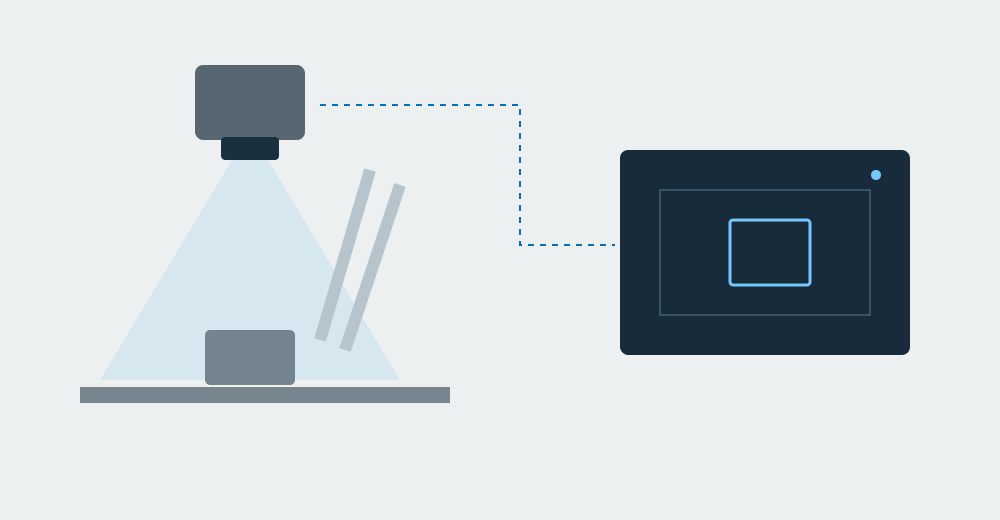
Image processing is software analysis of an image to extract information. In industrial machine vision, a camera, lighting and software work together on a defined task, such as checking component presence or detecting a visible defect.
From image capture to results
First, an image is captured and the relevant region is selected. Software assesses this region against a defined criterion and presents the result as a measurement, image marker or component condition.
Where can it be used?
| Industrial need | Inspection question | Useful output |
|---|---|---|
| Visual inspection | Is there a visible anomaly? | A marked image for review |
| Assembly inspection | Is the required component visible in its defined position? | A presence or position assessment |
| Image-based measurement | What is the visible distance or dimension? | A measurement comparable with a technical criterion |
| Equipment monitoring | How has the equipment’s condition changed? | An image history and change trend |
Feasibility depends on the component, imaging conditions and acceptance criteria. Dimensional measurement from an image requires a scale reference and correct system setup.
Example application: pallet monitoring
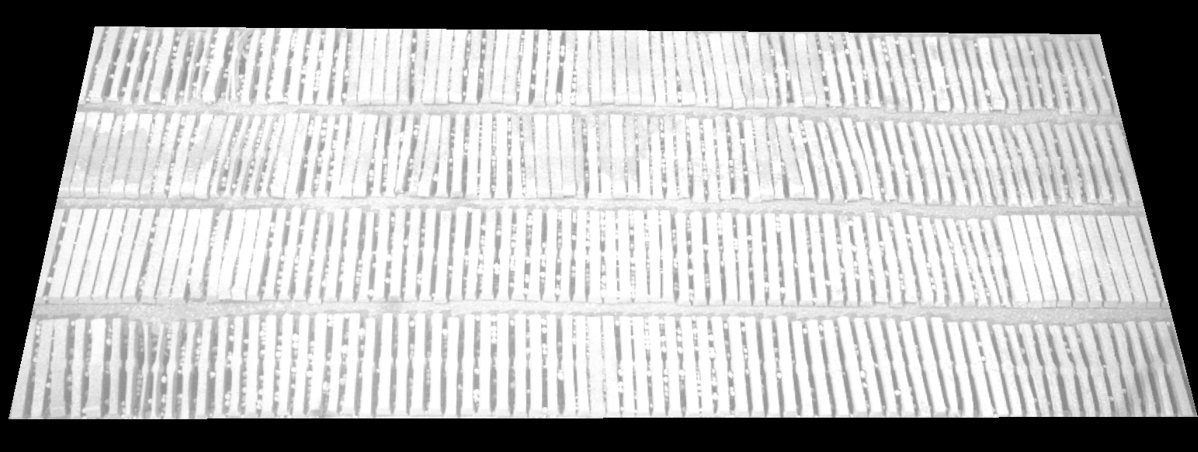
In Arya Ravesh Mahshahr’s pallet monitoring system, images are used to inspect grate bars and record pallet condition. Linking each result to the equipment identifier enables record retrieval and inspection comparison.
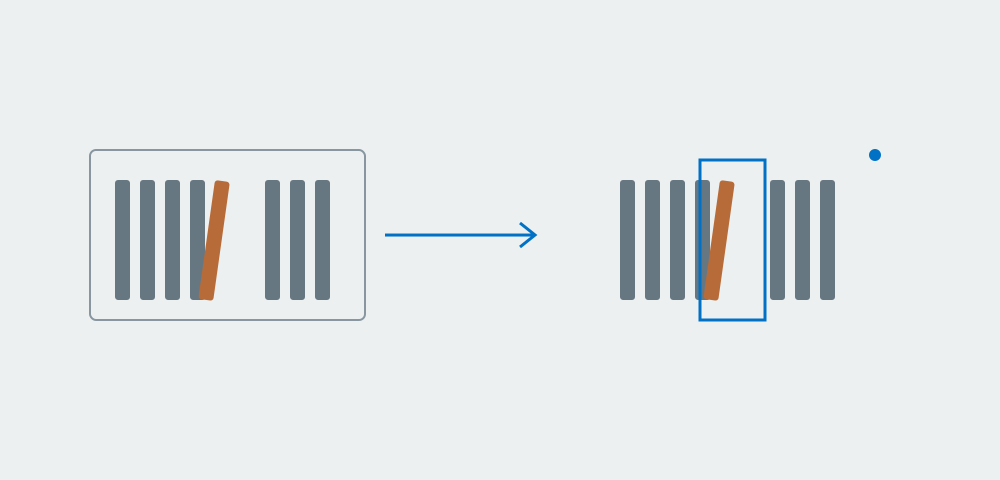
Image quality
Lighting, camera angle, lens and capture timing affect detail clarity. On a moving line, imaging must be coordinated with component motion. A blurred image or an obscured region does not provide enough information for analysis.
Selecting an analysis method
Some tasks use defined rules, such as checking a gap or component presence. Learning-based methods can be considered for other problems. Method selection depends on real samples and testing detection errors under production conditions.
Before starting a project
Define the target defect, sound and defective samples, movement speed, lighting and dust conditions. Also establish what information is recorded, who reviews the result and which acceptance criteria apply to the system.